Exhibition
Concept, Dogma and Feeling: Italian Drawings 1550-1650
Concept, Dogma and Feeling: Italian Drawings 1550-1650. The Cleveland Museum of Art, Cleveland, OH (organizer) (August 27-October 20, 1991).
View this exhibition at the source ↗Cite this exhibition
Concept, Dogma and Feeling: Italian Drawings 1550-1650. Cleveland Museum of Art, Cleveland. August 26, 1991 – October 19, 1991. Dartabase. https://dartabase.art/exhibitions/284579af-152a-463a-9ea2-b05e100ebbdb.
Works from this exhibition held in Dartabase
![Various Sketches of the Madonna and Child (recto); Architectural Studies (verso) [partially visible on recto], Paolo Veronese, c. 1570, pen and brown ink (iron gall) and brush and brown wash](https://openaccess-cdn.clevelandart.org/1939.670/1939.670_web.jpg)
Various Sketches of the Madonna and Child (recto); Architectural Studies (verso) [partially visible on recto]
Paolo Veronese · c. 1570
pen and brown ink (iron gall) and brush and brown wash
CC0
13 shows
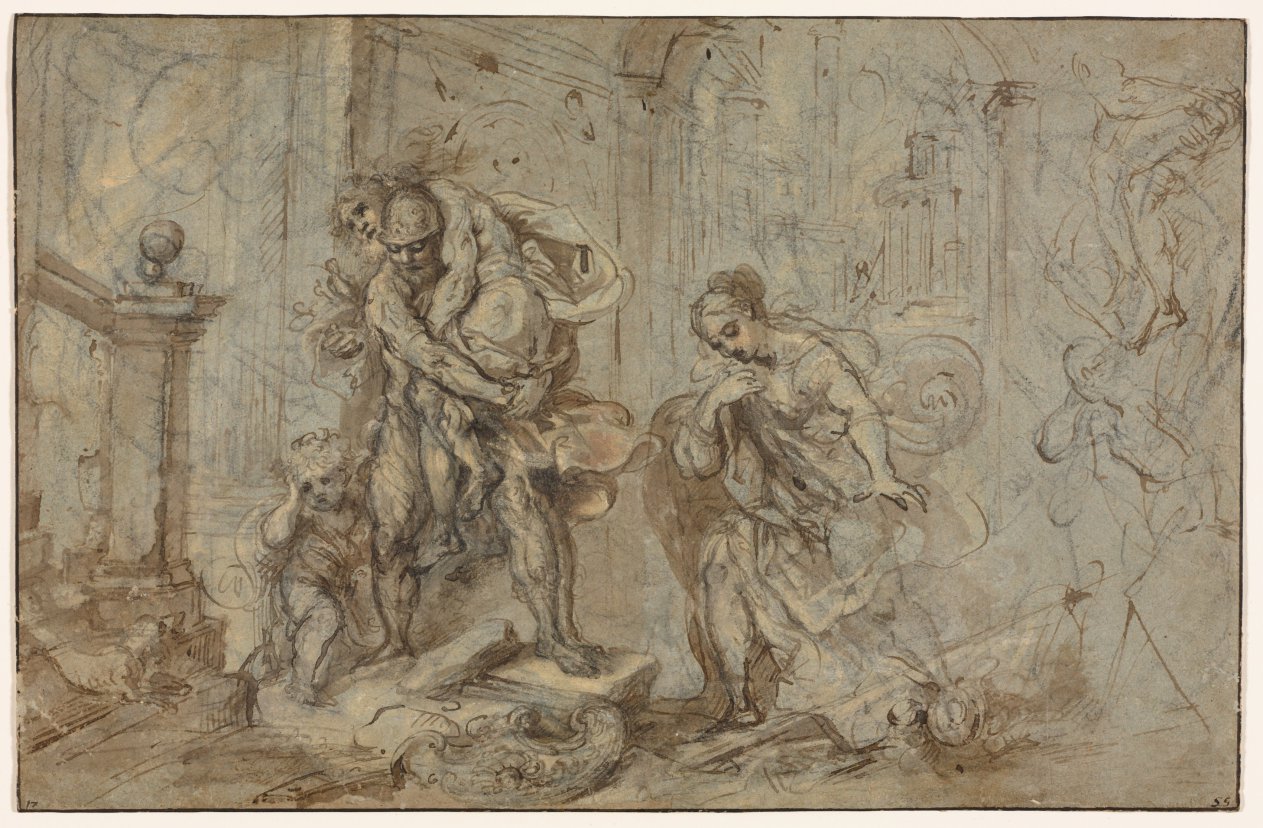
Aeneas Saving Anchises at the Fall of Troy
Federico Barocci · 1587–88
Pen and brown ink, brush and brown wash and yellow gouache heightened with traces of white, over black chalk, with stylus (banister); framing lines in pen and brown ink
CC0
18 shows
Bibliography
- ◆
Paolo Veronese, Various Sketches of the Madonna and Child (recto); Architectural Studies (verso) [partially visible on recto], c. 1570, pen and brown ink (iron gall) and brush and brown wash, Cleveland Museum of Art, Cleveland.
- ◆
Federico Barocci, Aeneas Saving Anchises at the Fall of Troy, 1587–88, Pen and brown ink, brush and brown wash and yellow gouache heightened with traces of white, over black chalk, with stylus (banister); framing lines in pen and brown ink, Cleveland Museum of Art, Cleveland.
- ◆
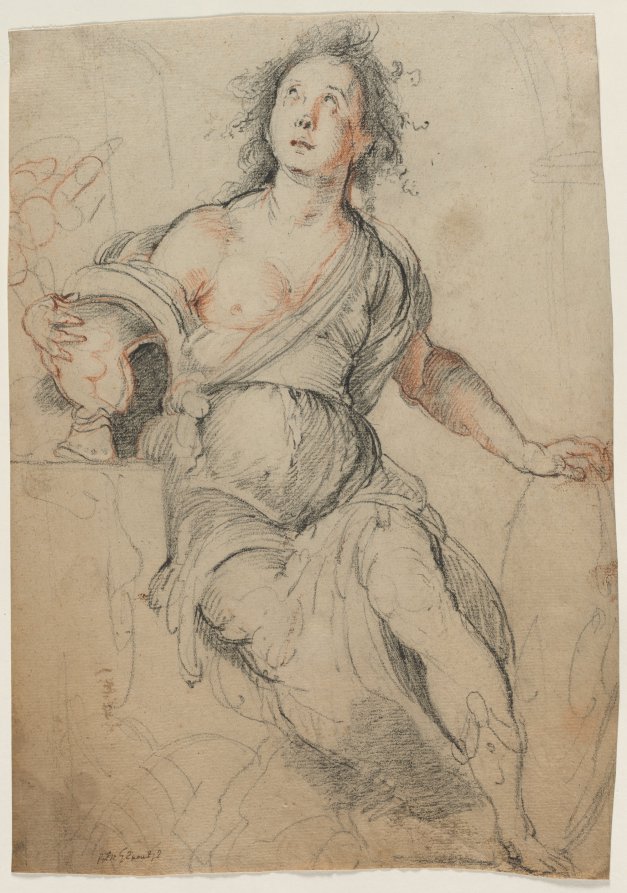
Bernardo Strozzi, Allegorical Figure, c. 1635, black chalk with red chalk , Cleveland Museum of Art, Cleveland.
- ◆
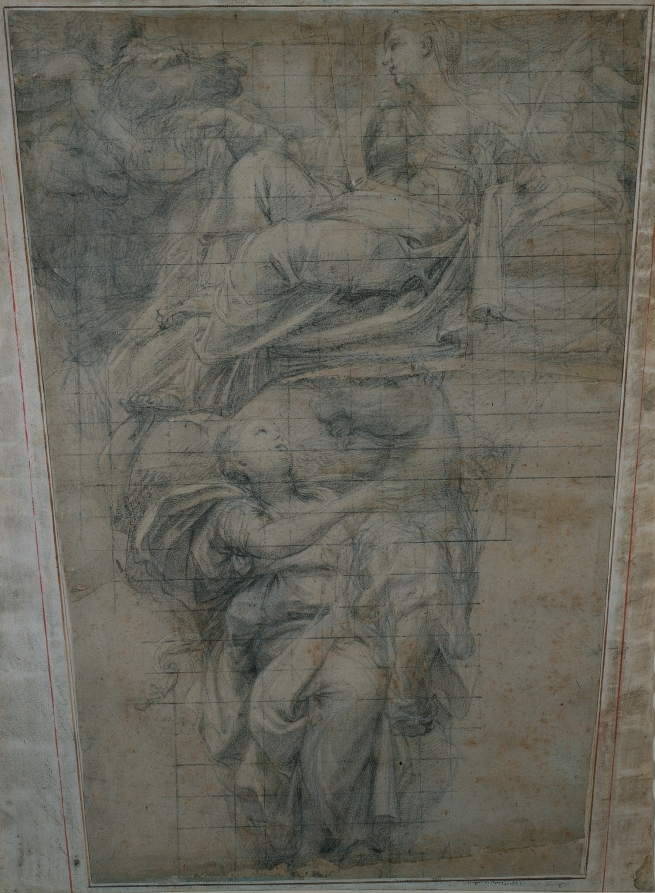
Domenichino, Temperance, 1628–30, black chalk heightened with white chalk, squared with black chalk, Cleveland Museum of Art, Cleveland.
New to exhibition history? Learn why it matters for provenance and art history research →